
Australia’s UV radiation is a whopping 15% higher than what you’d find in other parts of the world. On top of that, our coastal environments are also chipping away at furniture with salt air corrosion. This is having a major impact on most of the country’s populated areas. You’d think that the outdoor furniture on sale would at least be up to the task. The reality is that most mainstream outdoor furniture is still being made to the same specs as furniture sold in Europe and North America. It looks great in the showroom, but by the time you get the thing home it’s already showing signs of fading, weakening, or just plain rusting away within two Aussie summers. The problem has got nothing to do with budget. It’s all about using the wrong materials for our local climate.
The Australian Climate Problem That Most Furniture Just Ignores
Australia’s got a huge coastline. That means a huge proportion of our outdoor furniture is being battered by salt air in residential areas. Inland areas have a different set of problems. Get through a single hot summer, and the daily temperature swings are flexing the frames and joints of your outdoor furniture like crazy. Then there’s the sun. Don’t get me wrong, it’s lovely to have some winter sun coming in. It means the north-facing areas in most Aussie homes take a real hammering from UV light. These aren’t your generic weatherproofing problems. It’s the kind of thing that needs some really specific consideration. Using the same old materials that’ll work just fine on a central European patio isn’t enough.
Material by Climate, What Actually Holds Up Where
Powder-coated aluminium is probably the single best all-round choice for framing your outdoor furniture in Australia. It’s rust-proof, lightweight, won’t let the sun break it down, and will stand up to most kinds of load. Of course, the quality of the coating really does matter. Look for solid welds over screwing things together. Don’t skimp on the frame sections. You want something that’s sturdy enough not to flex under its own weight. PE wicker is another good choice. The synthetic stuff outperforms natural rattan and cane in every way, especially when it comes to resisting both UV and moisture. If you’re prepared to fork out for the premium stuff with UV stabilisers, it’s like having a whole new product.
Teak and acacia hardwoods do okay in Australia, but they do need a bit of maintenance to keep them looking their best. A good oiling every year should keep them looking shipshape. Neglect them, and they’ll start to crack and break along the grain. Steel, on the other hand, just doesn’t cut it. Even galvanised steel isn’t really up to the salt air corrosion in coastal areas.
Getting Your Space Sorted Before Buying Furniture
Retailers say the biggest mistake Aussie householders make when buying outdoor furniture is buying stuff that’s just too big for their outdoor space. A good rule of thumb is to leave about 90 cm between a chair and anything else. That way, you can still move around if someone’s sitting down. Make sure you’ve also got enough room between your outdoor dining setup and any fixed features like walls or barbecues. We’re talking at least a metre here. Honestly, the less cluttered it looks, the better. Mark out the footprint on the actual ground with some tape before you commit to a setting. That way, you can get a real feel for how it’s going to work. Photos of a setting in a showroom are basically useless. The showroom space is always set up to make the furniture look good. That isn’t always the same as how it looks in your own backyard.
Price Points and What You Can Really Expect to Get for Your Money
In Australia, quality but still affordable outdoor furniture usually falls between about $800 and $2,500 for a whole setup that includes a table, chairs, and cushions. At that price point, the materials, the way the pieces are put together, and the UV treatments are usually good enough to last around eight to ten years under normal conditions. That’s assuming you do a bit of basic maintenance. If you’re looking to spend less than $400, though, you’re probably going to be getting furniture that starts to fall apart in just a couple of years. Expect faded cushions, rust on exposed metal parts, and PE wicker that goes all stiff and cracks up. At the other end of the scale, furniture priced above $3,000 is where you’ll find designer pieces made to order with all sorts of fancy features and longer guarantees. Most people, though, will find that the $800 to $2,500 range is where longevity and budget meet in the middle.
Maintenance Makes a Big Difference to How Long Your Furniture Lasts
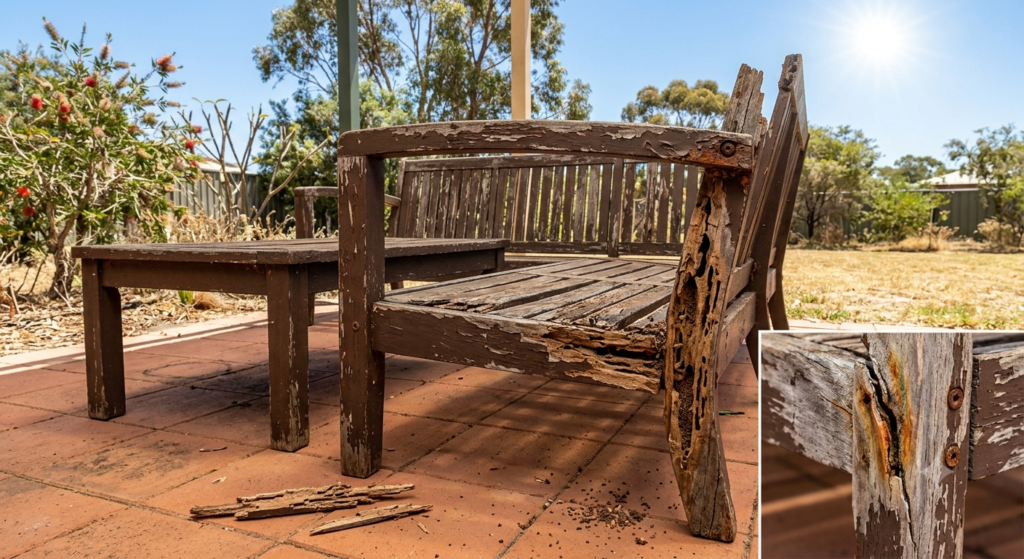
You can easily double or even triple the life of your outdoor furniture with a bit of regular care. All you need to do is give it a wipe down with a damp cloth every few weeks. That gets rid of all the pollen, dust, and salt residue that accumulates. If you’re near the coast, you might need to give it a good rinse every now and then. Hardwood sections need to be treated with teak oil or something similar every year or so. That stops UV from cracking them and turning them grey. If you decide to cover your furniture for a few months each year, say during winter or while you’re away on holiday, you’ll find that the cushions and the finish last a lot longer. They’re simply not getting all that extra UV exposure. The cost of all that maintenance is only a fraction of what it would cost to replace the whole setting. That’s really the key difference between furniture that makes it to a decade and furniture that doesn’t.